It’s time for northern climate gardeners to put your summer landscape plans into action. The soil is warm enough now to plant show stopping dahlias, exotic lilies, and breathtaking gladiolus. Cool-season crops and many herbs can also be put into the ground early this month, as they can tolerate a light frost. Which we have had quite a few of this first week of May. If you have any plants in the ground, cover them up if your area has any risk of frost in the forecast. Keep an eye on watering also, it has been very dry and windy which will require more frequent waterings. This is where it comes in handy to have a rain gauge in place in the garden.
I wish you all the most rewarding gardening season filled with bountiful harvests, minimal deer browse and finding peace with nature in your own backyard. Our culture has become disconnected with the outdoors and by growing your own food you are taking steps to re-connect with the earth. Gardening is the best therapy for people of any age. Research has even shown that touching soil can act as a natural anti-depressant. The hard work has begun to transform our yards into healthy living ecosystems that will create diversity and improve our planet. Read through my Minnesota May garden guide to learn what you can be doing now to ensure a healthy landscape.

Garden Checklist
Our May full moon is the Full Flower Moon, which will appear on May 1, 2026
Feed garlic early in the month
Harden off seedlings started indoors
Plant carrots, radish, lettuce, onions and potatoes early in the month- wait until closer to June to plant heat loving veggies such as corn, peppers, and tomatoes. My rule of thumb is consistent 50+ nighttime temperatures before I put in certain summer crops.
Set up a rain gauge
Stay off wet soil to avoid compaction
Plant new trees and shrubs- Choose Minnesota native when possible
Fertilize lawn
Clean raised beds and amend soils with organic materials
Turn compost pile
Harvest asparagus when stalks are 7-9 inches tall
Shop local plant sales to purchase hanging baskets, annuals, and native varieties
Wash outdoor furniture
Install wildlife fencing if needed
Incorporate pollinator favorites into garden spaces such as zinnias and cosmos
Keep bird baths filled with cool clean water
Monitor plants for drought and water when necessary, most veggies will require about 1 inch per week.
Pay attention to red flag fire warnings! Forest fires are serious.
Inspect landscape trees for signs of pests or disease and take action if needed. Remember DO NOT prune any oak trees from April-October to avoid the risk of spreading oak wilt disease.

Hello Harvest
Perennial favorite asparagus is ready for picking. Cut asparagus at the base with a sharp knife and store in a container with water. Prepare and eat as soon as possible. I like my asparagus char-grilled with a drizzle of olive oil, salt & pepper, with a squeeze of lemon. Asparagus is also delicious in many soup recipes or as an accompaniment on a crudité platter.
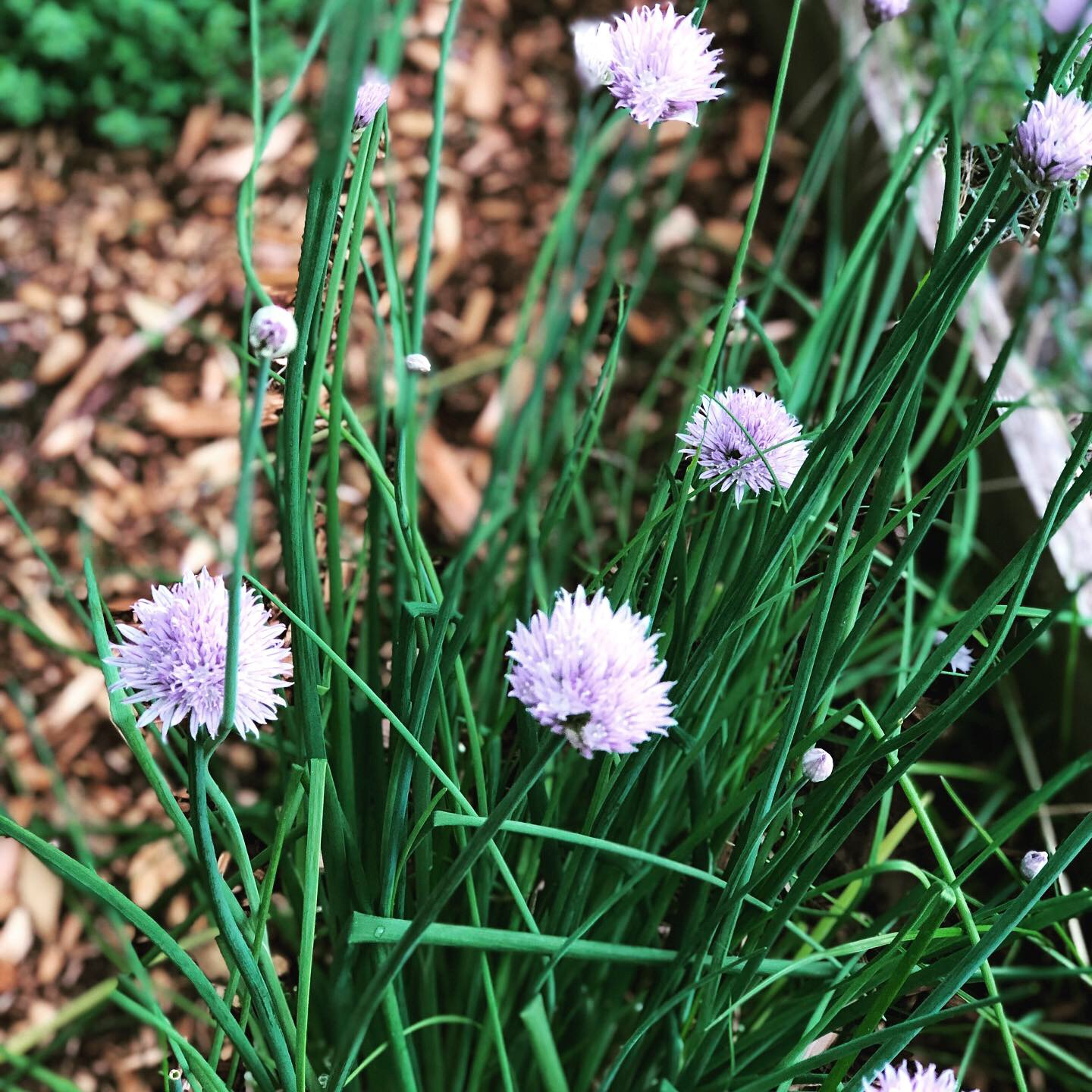
Chives have been making an appearance in salads, compound butters, and potato dishes over the last six weeks. Mine are beginning to show signs of flowering with tiny purple buds at the tips. Chive flowers are also edible and pair well with infused oils and vinegars. Try drying your chives this season to create flakes that can be used to add zest to summer salads and dips.
Tom Thumb Peas are dwarf sized plants that grow incredibly quick and produce small snap peas. I started 4 plants in mid-March and began snacking on them last week. Four plants fit beautifully in a 12-inch container. Seeds may be re-sown throughout the growing season as well for a continuous supply of fresh peas.
This is also the month to be harvesting rhubarb, if I grew this large bushy perennial. I don’t care for the sour taste of rhubarb. Rhubarb is traditionally used in baking, jam making, or juicing. Only the stalk (petioles) is edible, as the leaves contain high levels of the toxin oxalic acid. Many people like to pair strawberries with rhubarb for baking pies.
I start lettuce/leafy greens in salad bowl planters in early spring to have fresh eating lettuce by early May. Lettuce is cold tolerant and can handle those late spring frosts. Most lettuces will bolt once the heat of summer hits, plant early and again in late summer for a fall harvest.


